

Tencent Won't Call Its Newest Model 'Hunyuan'
Tencent's new 770B open model closes in on GLM-5.3 and Kimi K3, yet its own materials never once attach the Hunyuan name to it. That's not a branding accident.
Look at every piece of Tencent's own material for this release: the model card, the official newsroom post, the pricing page. Nowhere does the word "Hunyuan" appear attached to the model's name. It's just "Hy4 preview," full stop, even though it's plainly the next entry in the Hunyuan lineage and ships inside Hunyuan-family products. A chunk of the press covering it went ahead and called it "Hunyuan Hy4" anyway, presumably because that's the more legible headline. Tencent itself never did. When a company holds back its own established brand name from a release, that's usually not an oversight. It's a decision, and it tells you something about how much confidence Tencent has in what it just shipped.
What it shipped is, on paper, a genuinely serious open-weight model. Hy4 preview landed on Hugging Face on August 28, 2026: 770 billion total parameters, mixture-of-experts (a design where the model has far more parameters stored than it actually uses on any given input, routing each token to a small subset of specialized "expert" subnetworks instead of running the whole thing every time), with only 49 billion of those parameters active per token. That's roughly a 15-to-1 ratio between what's stored and what's computed, which is the entire point of MoE: frontier-scale capacity at a fraction of frontier-scale inference cost. Under the hood that's 78 transformer layers (the first one dense, for training stability, the other 77 running the MoE routing), 256 routed experts plus one expert that's always on, with 8 routed experts firing per token alongside it. There's also a small bolted-on module, about 10 billion parameters with 0.7 billion active, trained specifically to enable speculative decoding, a technique where a cheap draft model proposes several tokens at once and the big model just verifies them, which is a real latency win rather than a benchmark gimmick. Context window is 1 million tokens. And Tencent's own announcement confirms the license is a clean Apache 2.0, with none of the revenue-threshold carve-outs Z.ai wrote into GLM-5.3's terms. If that holds up, it's a more generous license than several of its Chinese open-weight peers have offered this year.
Spec | Hy4 preview |
|---|---|
Total parameters | 770B |
Active parameters per token | 49B |
Transformer layers | 78 (1 dense, 77 MoE-routed) |
Routed experts per MoE layer | 256, plus 1 always-on shared expert |
Experts fired per token | 8 routed + 1 shared |
Speculative-decoding module | 10B parameters, 0.7B active |
Context window | 1,000,000 tokens |
License | Apache 2.0 |
None of that reads like a company trying to bury a release. So why the muted branding? Because "preview" is doing real work in this model's name, and Tencent seems to know it. The model card itself says there's still "headroom" left in both pretraining and post-training, meaning the eventual finished Hy4 should outscore what's on Hugging Face right now. Attaching the full Hunyuan brand to something the company is openly calling unfinished would mean putting the flagship name on a model it plans to quietly outdo within months. Leaving "Hunyuan" off lets Tencent get credit for the leap without fully staking its reputation on numbers it already expects to improve on.
The architecture, in plain terms
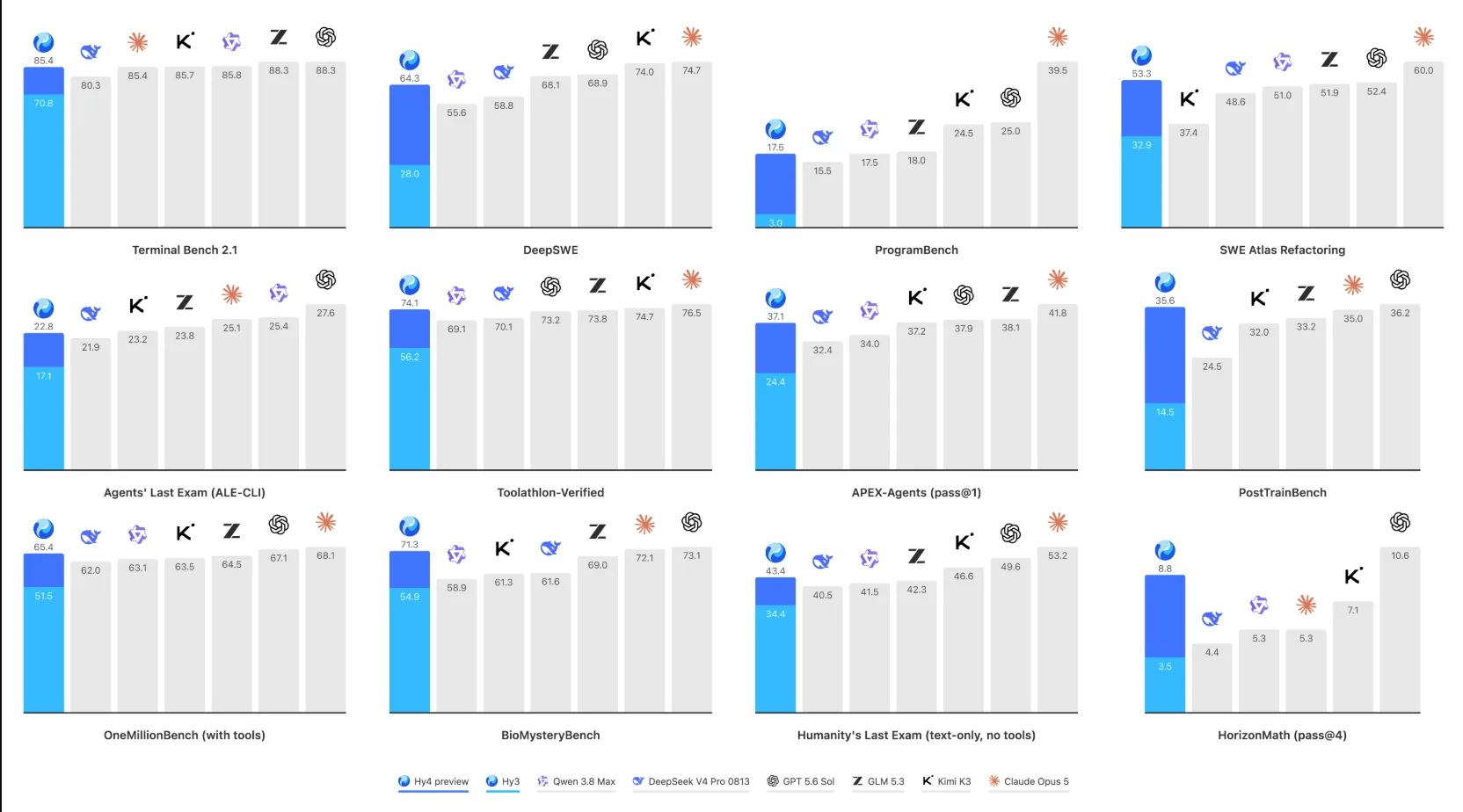
Two design choices explain most of what's actually new here, and Tencent is upfront that neither one is its own invention. The attention mechanism is what the model card calls Gated DeepSeek Sparse Attention with IndexCache, a direct descendant of the sparse-attention approach DeepSeek pioneered. Ordinary attention has every token weigh every other token in the sequence, which gets brutally expensive as context grows. A lightweight "indexer" (32 heads, 128 dimensions) instead picks a shortlist of roughly 2,048 tokens that actually matter for a given query, and the expensive computation only runs over that shortlist. That's the mechanism making a 1-million-token context window computationally survivable rather than theoretical. Hy4's own contribution is IndexCache: reusing that shortlist across layers instead of recomputing it at every one, with a gate deciding how much to trust the reused version, trading a bit of precision for a meaningful compute saving.
The second piece, identity Hyper-Connections, addresses a different problem: how information moves between layers once it's been computed. A standard transformer funnels each layer's output into one shared residual stream, a single running total that gets added to and read from at every layer. Hy4 runs four of those streams in parallel instead, with learned weights controlling how much each layer reads from and writes to each one, plus a guaranteed identity path so gradients keep flowing cleanly while the extra streams are still being learned. It's a genuinely more expressive way to move information through a 78-layer network. Again, not a Tencent invention (hyper-connections trace back to earlier outside research), but stacking it with sparse attention at 770B scale, in an open release, is the part worth noting.
Where the generational leap is real, and where it's marketing
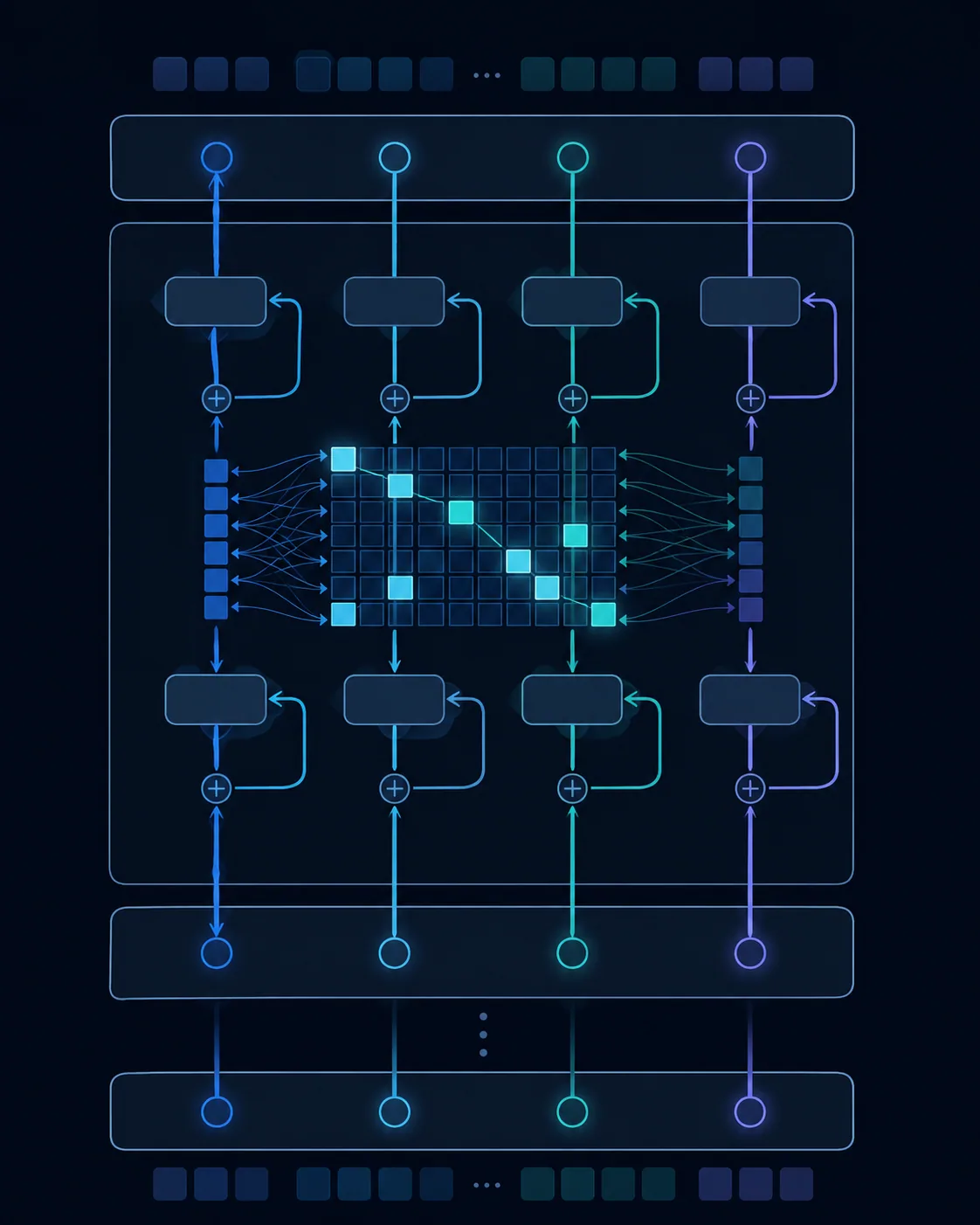
Tencent's featured chart puts Hy3 and Hy4 side by side, and the gap looks enormous. It is, on one specific benchmark: DeepSWE, an agentic software-engineering test, where Hy4 jumps from Hy3's 28.0 to 64.3, according to independent tracking from DataLearnerAI. That's more than double, and it's enough to edge out both Qwen3.8-Max (56.6) and DeepSeek-V4-Pro (62.7) on that specific test. It's the kind of number a chart is built around.
But look at Humanity's Last Exam, a broader reasoning benchmark, and the leap shrinks to 53.2 up to 55.4, with Hy4 still trailing GLM-5.3's 62.5 by a wide margin. On GPQA Diamond, Hy4 scores 92.3, close behind Kimi K3's 93.5 and roughly level with GLM-5.3. The honest read is that Hy4 made a real leap specifically on agentic coding, the kind of task where a model chains tool calls and edits real code, and a much smaller one on general reasoning. That's worth knowing before treating "beats the previous generation" as a blanket claim, because it isn't one.
Benchmark | Hy4 preview | Hy3 | Qwen3.8-Max | DeepSeek-V4-Pro | GLM-5.3 | Kimi K3 |
|---|---|---|---|---|---|---|
DeepSWE (agentic coding) | 64.3 | 28.0 | 56.6 | 62.7 | not published | not published |
Humanity's Last Exam | 55.4 | 53.2 | not published | not published | 62.5 | not published |
GPQA Diamond | 92.3 | not published | not published | not published | roughly level | 93.5 |
Source: DataLearnerAI's independent tracking of published model-card and leaderboard figures. "Not published" means the source doesn't report a comparable score, not that the model scores zero.
The head-to-head numbers against GLM-5.3 and Kimi K3 deserve the same scrutiny. Tencent's own blind evaluation, 163 in-house engineers grading 203 real engineering tasks, has Hy4 at 2.99 out of 4, GLM-5.3 at 2.92, and Kimi K3 at 2.94. That's Tencent's own graders scoring Tencent's own model as the winner, by a margin of five to seven hundredths of a point, which is a statistical tie dressed up as a win. Take it as marketing copy, not evidence.
Grader | Hy4 preview | GLM-5.3 | Kimi K3 |
|---|---|---|---|
Tencent in-house engineers (163 graders, 203 tasks, 0 to 4 scale) | 2.99 | 2.92 | 2.94 |
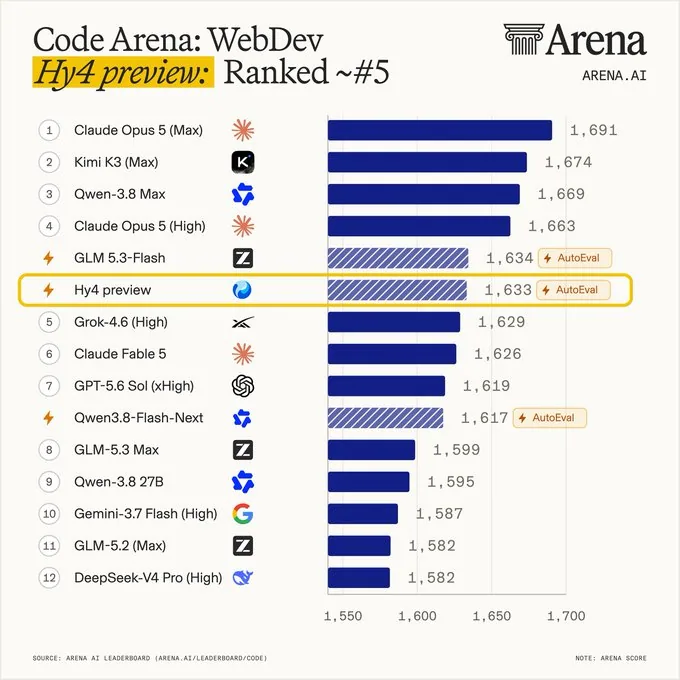
The more useful signal comes from outside Tencent's building. On Arena's WebDev leaderboard, a crowd-voted, independently run ranking, Hy4 preview sits at an Elo of 1633 as of early September, per tracking from AI commentator Cobus Greyling: one point behind GLM-5.3-Flash, ahead of Grok-4.6 High. The South China Morning Post separately put Hy4 eighth overall on that same leaderboard, ahead of Qwen3.8-Flash-Next, still behind Claude. Arena's own account put a size on the generational jump: Hy4 landed around fifth place overall on the Code Arena: WebDev board with that 1633 score, up from Hy3's 31st place, a swing of roughly 115 Elo points in one generation, and around third place among open-weight models specifically, up from Hy3's seventh. That's a real, externally verified result, and it's the strongest evidence in this whole release that Hy4 belongs in frontier-adjacent conversation rather than just Tencent's own slide deck. What Hy4 doesn't have yet is a score on Artificial Analysis's Intelligence Index, the benchmark suite most resistant to vendor cherry-picking, which hadn't weighed in as of this writing. Until it does, "frontier-adjacent" is a reasonable label. "Frontier" isn't, yet.
Source | What it measures | Hy4 preview | Hy3, for comparison |
|---|---|---|---|
Cobus Greyling / Arena tracking | Elo, Code Arena: WebDev | 1633 (1 point behind GLM-5.3-Flash, ahead of Grok-4.6 High) | not tracked in this comparison |
Arena.ai official (AutoEval) | Rank, Code Arena: WebDev, all models | approx. 5th | 31st |
Arena.ai official (AutoEval) | Rank, Code Arena: WebDev, open-weight models only | approx. 3rd | 7th |
South China Morning Post | Rank, same leaderboard | 8th overall | not stated |
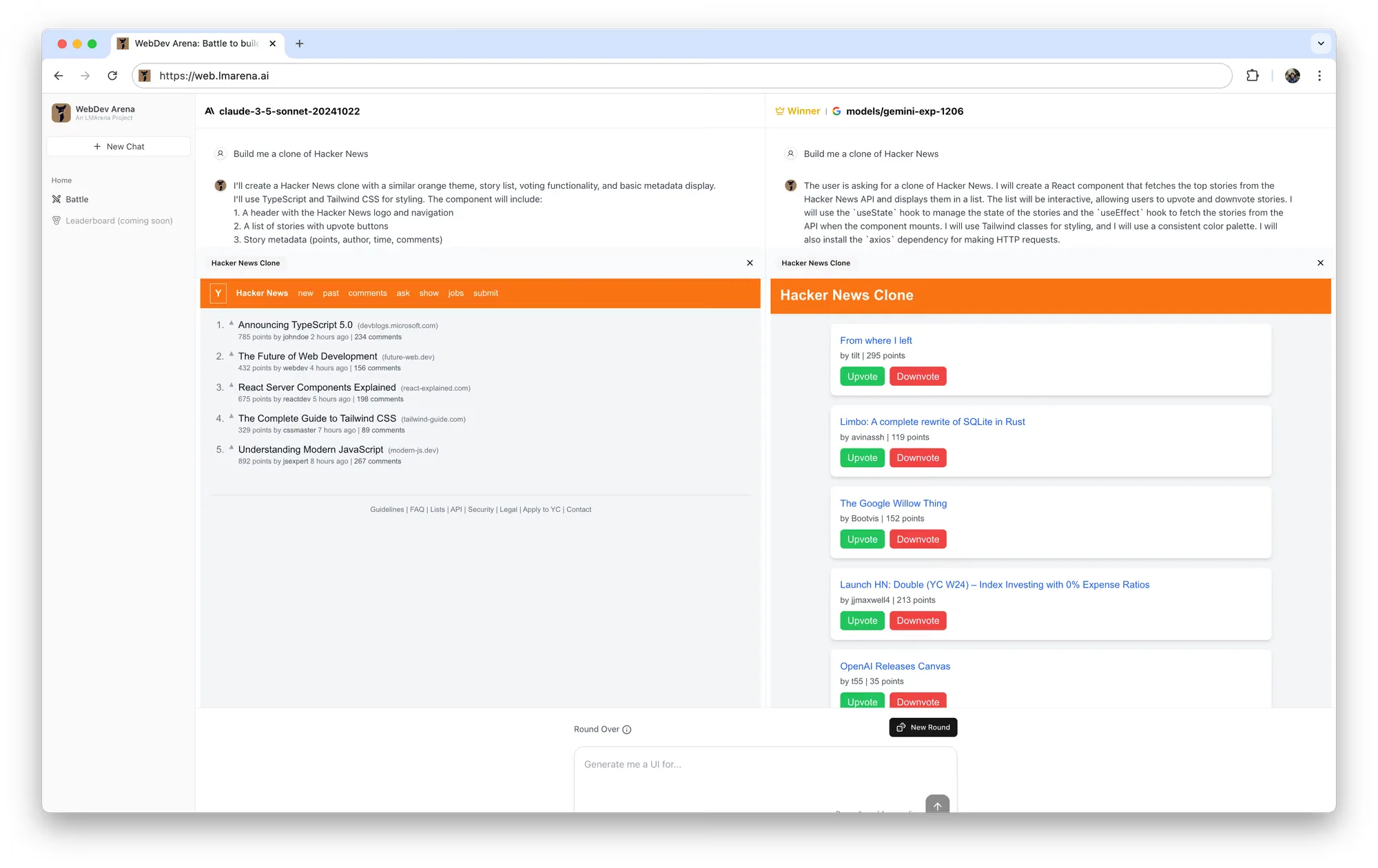
WebDev Arena works by blind pairwise comparison: a prompt goes out, two models each build a working web app from it, and a voter clicks whichever app actually runs better before either model's name is revealed.
Getting your hands on it
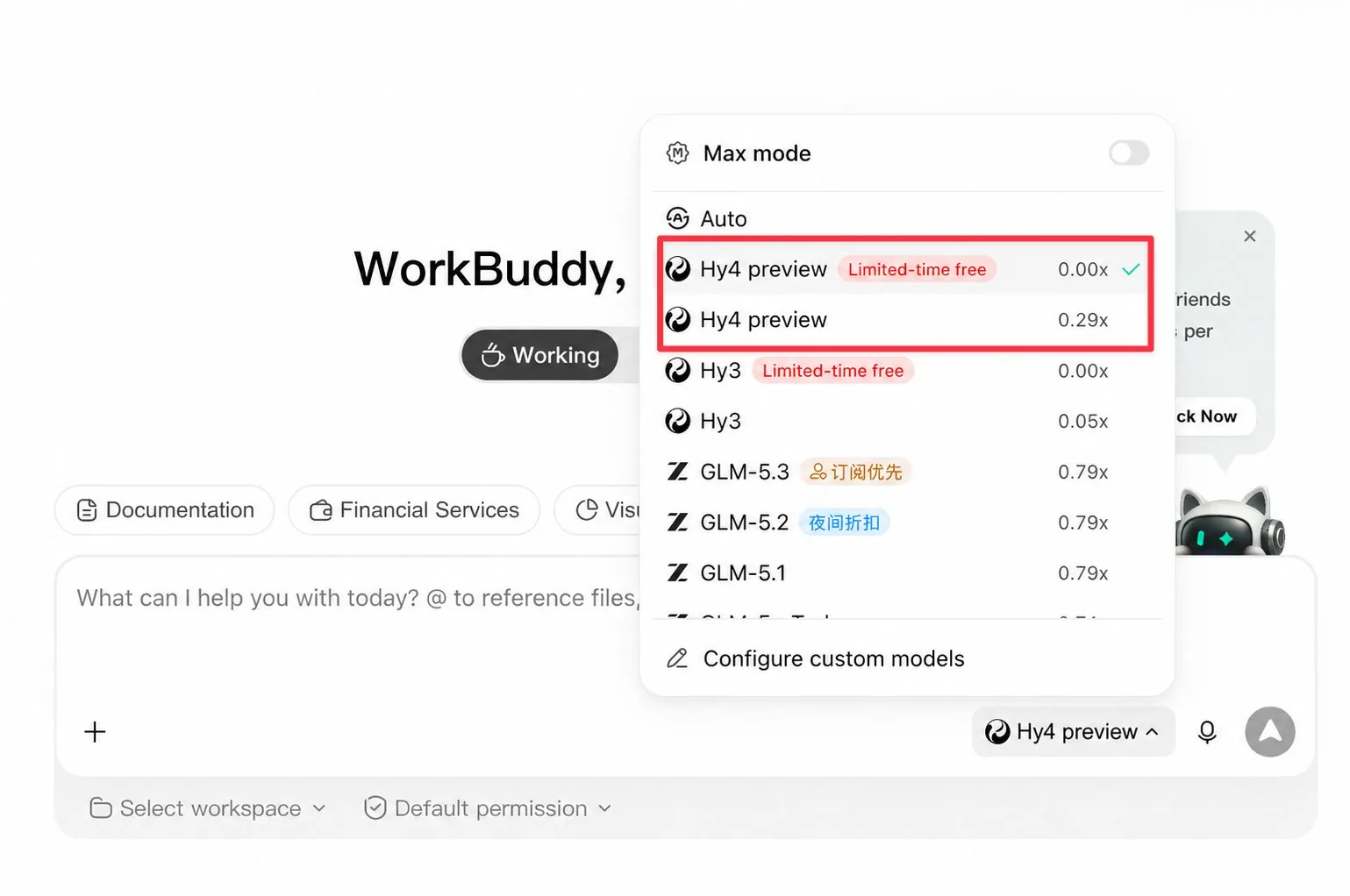
The full weights run about 1.56TB in bf16, per TechNode's coverage of the release, which puts local inference out of reach for anyone without a serious multi-GPU setup. A community 1-bit GGUF quantization appeared within days, cutting that down to roughly 229GB, with its uploader's own Hugging Face profile listing a Tencent affiliation, small enough to be genuinely interesting for a well-equipped local rig and still nowhere near casual hardware. If running weights yourself isn't the point, Tencent's API prices Hy4 preview at $0.834 per million input tokens and $2.501 per million output tokens, with a two-week free trial, and it's already live inside Tencent's own Yuanbao chat app, the ima assistant, and the WorkBuddy and CodeBuddy coding tools for anyone who'd rather not touch weights at all.
Option | Size or price | Notes |
|---|---|---|
Full weights, bf16 | approx. 1.56TB | Needs a serious multi-GPU setup |
Community 1-bit GGUF quant | approx. 229GB | Uploader's Hugging Face profile lists a Tencent affiliation |
API, input | $0.834 / million tokens | Two-week free trial |
API, output | $2.501 / million tokens | Live in Yuanbao, ima, WorkBuddy, CodeBuddy |
One more claim worth flagging before you take the whole package at face value: Tencent says Hy4 "participated for the first time in the automated optimization of training methods," an early recursive self-improvement loop the company credits with a 31.8% lift in training and inference throughput. That's a striking claim about a model helping optimize its own training pipeline, and it currently has zero independent verification behind it. File it under "worth watching," not "worth repeating as settled fact."
None of these caveats erase what actually happened here: a company that wasn't previously read as a frontier open-weight contender just shipped a 770B sparse MoE model, with a legitimate architectural pedigree, a 1-million-token context window, and a genuinely permissive license, that lands within striking distance of GLM-5.3 and Kimi K3 on at least one externally verified leaderboard. That's the real news, and it would be the real news even if Tencent had stapled the Hunyuan name to it. The fact that it chose not to is the tell that Tencent itself isn't fully sure this is the model it wants remembered as Hunyuan's next generation. Watch what happens when the finished version ships, and whether the Hunyuan name finally shows up on it.